What Do You Call That Room?

What Do You Call That Room?
At the top of the stairs on the third floor, there’s a room that refuses to settle on a single name.
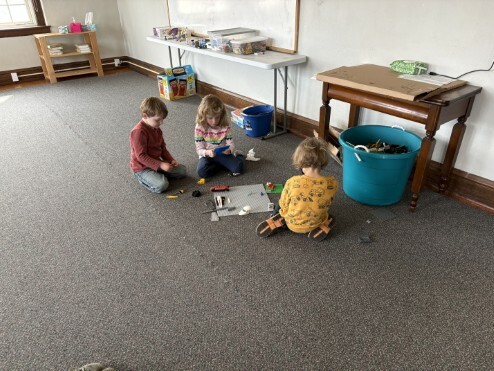
Over the years, people have called it different things depending on what they needed it to be. The fireplace room, when warmth and conversation defined it. The youth room, when it echoed with laughter, questions, and the restless energy of teenagers figuring out faith and life at the same time. And lately — almost accidentally — it’s been called the Lego room.
That last name wasn’t planned. A couple of months ago, Legos were brought in for a confirmation lesson. They weren’t necessarily meant to stay. But they did. They lingered in bins and on tables, quietly waiting. And then something unexpected happened: during worship, a few families began slipping upstairs. Not to avoid church, but to experience it differently. Kids building. Parents nearby. Conversations unfolding in-between towers and tiny plastic bricks. Some of those children have older siblings just down the hall singing with the Kirkwood choir, their voices carrying through the building even as younger hands are busy creating upstairs.
And just down the stairs, the service continued—live-streamed as it always is—so that even from that third-floor room, the rhythms of worship could still be followed, heard, and shared in a different way. Families know they are always welcome to remain in the sanctuary — in the prayground or the nursery—but some are finding that this room, with its quiet creativity and gentle hum of activity, is where their children most naturally settle in.
No committee approved it. No formal ministry was launched. It just… happened.
And maybe that’s the point.
As humans, we’re not strangers to structure. We value order, thoughtful planning, and shared discernment. But we also believe in a God who is always reforming the church—sometimes in ways that don’t begin with a motion and a second, but with a quiet moment of grace in an unexpected space.
So what do you call that room?
If you call it the fireplace room, you remember its history—a place of warmth, gathering, and presence. If you call it the youth room, you name its purpose in shaping faith for the next generation. And if you call it the Lego room, you’re acknowledging what God is doing there right now: creating safe and sacred space for play, connection, and belonging in a way that meets people exactly where they are.
Names matter, but they don’t have to limit us.
That room at the top of the stairs is, in many ways, a living parable. It reminds us that ministry doesn’t always look the way we expect. That sacred moments can happen with plastic bricks scattered across a table. That worship isn’t confined to pews or even to silence. And that sometimes, the Spirit moves not through what we planned, but through what we allowed to remain.
Maybe the better question isn’t what we call the room.
Maybe the better question is: what is happening there?
Because whatever name we choose, it’s clear that the room has become something more than a location. It’s become an invitation—especially to families, to children, to those who might need a different doorway into worship.
So call it the fireplace room. Call it the youth room. Call it the Lego room.
Or maybe just call it what it truly is: a space where God is at work, quietly building something—one piece at a time.